
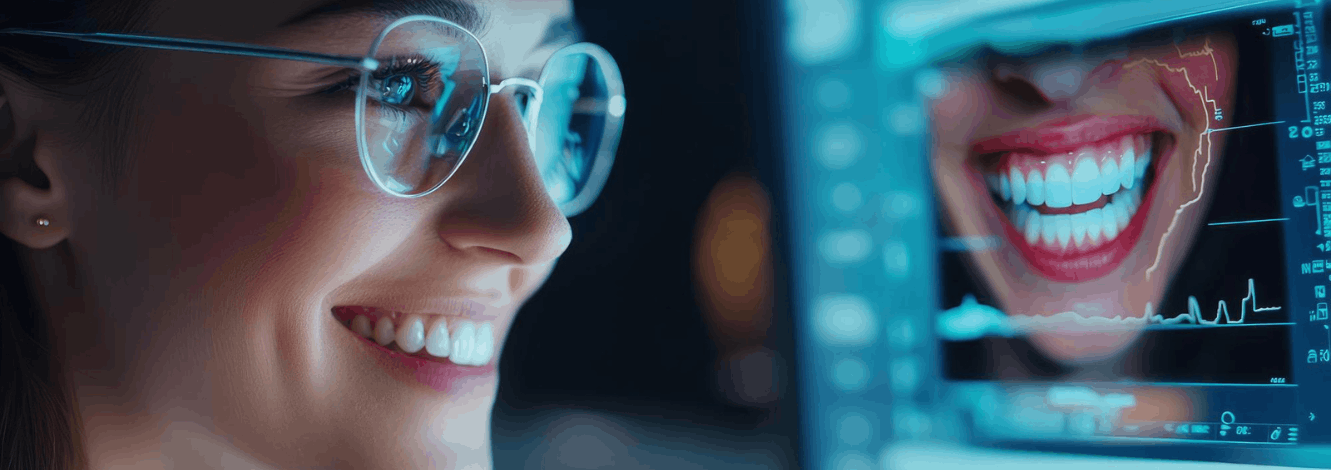
When people consider improving their smile, they often think about changes such as tooth colour, shape, alignment, or overall symmetry. A smile makeover brings these different aspects together to create a more balanced appearance based on the individual’s teeth, gums, facial features, and expectations. Traditionally, dentists have relied on clinical examinations, photographs, physical models, and their experience to plan these changes. With advances in dental technology, the way dentists visualise and plan cosmetic treatments has evolved.
This is where Digital Smile Design has changed the approach to smile planning. By using digital photographs, scans, and visualisation tools, dentists can assess the smile in greater detail and give patients a clearer understanding of the proposed treatment. Understanding the difference can help patients make informed decisions about cosmetic dental treatment.
Digital Smile Design is a digital approach to analysing and planning a patient’s smile. It considers the relationship between the teeth, gums, lips, and surrounding facial features rather than looking at individual teeth alone.
During planning, a dentist may assess:
Digital photographs and scans can bring these details together during treatment planning. The purpose is to develop a smile plan that suits the patient’s facial characteristics and oral health instead of simply copying a standard smile shape.
The process generally begins with a consultation and detailed smile assessment. The dentist first understands what the patient wants to change and examines the health and condition of the teeth and gums.
Digital records may then support the planning process. Depending on the case, these can include photographs, digital scans, and other diagnostic information. The dentist can use these records to evaluate how proposed changes may affect the overall smile.
In some cases, digital visualisation can help patients see the proposed direction of treatment before it begins. This makes conversations about details such as tooth length, shape, proportions, and overall appearance easier to understand.
A traditional smile makeover also starts with a detailed dental examination and discussion of the patient’s expectations. The dentist evaluates the teeth, gums, and bite before recommending suitable cosmetic treatments.
Traditionally, dentists have used tools such as:
These methods remain clinically useful. A traditional approach does not mean outdated dentistry. Dentists still rely on professional judgement, clinical examination, and diagnostic records to develop an appropriate treatment plan.
The main difference between digital smile design and traditional smile makeover lies in how information is captured, combined, visualised, and communicated during planning.
The biggest change is not that digital technology has replaced conventional dentistry. Instead, it has added new ways to visualise information and communicate treatment plans.
Traditional planning can rely heavily on photographs, physical models, and the dentist’s clinical assessment. With digital smile design planning, photographs and scans can be combined to study the smile more visually.
This can help the dentist consider tooth proportions, facial relationships, and the overall appearance of the smile while discussing possible changes with the patient.
Cosmetic dental treatment can be difficult to understand when changes are explained only through words or physical models. Digital visualisation can make the discussion more interactive.
A patient may find it easier to understand how changes to tooth shape, size, or alignment could affect the overall appearance of the smile. Digital smile design also allows the patient to discuss preferences before treatment begins.
A cosmetic treatment plan should suit the individual rather than follow one standard template. Digital records can help dentists consider facial proportions and smile characteristics while planning appropriate cosmetic changes.
Depending on the patient’s needs, this approach may support treatments such as veneers, teeth whitening, gum contouring, bonding, crowns, or orthodontic correction. The dentist still needs to determine which option suits the patient’s oral health and goals.
Technology has influenced several stages of modern cosmetic dentistry, particularly diagnosis, communication, and treatment planning.
High-quality photographs can help dentists evaluate the smile from different angles and document its starting condition. They can also support communication when discussing possible changes.
Digital scanners can capture detailed information about the teeth and oral structures without relying exclusively on traditional physical impressions. This can make the digital planning process more convenient for suitable cases.
Digital tools can help patients understand possible changes before committing to treatment. Seeing a proposed direction can make it easier to discuss expectations with the dentist.
Different records can be brought together to support a more organised planning process. However, technology does not replace clinical examination. The dentist still needs to assess the health of the teeth, gums, bite, and surrounding structures before recommending treatment.
Technology is only one part of cosmetic dental planning. Patients should also consider the health of their teeth and gums, the condition of their bite, their treatment goals, and the long-term suitability of the recommended procedure.
A good consultation should cover:
This helps patients make decisions based on their individual needs rather than choosing a procedure simply because it uses newer technology.
For patients exploring Smile Designing in Bandra, a professional consultation can help determine whether digital planning is appropriate and which cosmetic options may suit their dental needs.
Technology has changed how dentists analyse, plan, and communicate cosmetic dental treatment. Digital Smile Design can make the planning process more visual and collaborative, while traditional diagnostic methods continue to play an important clinical role.
The goal should not be to choose technology simply because it is newer. The right approach combines careful examination, professional expertise, appropriate digital tools, and the patient’s individual goals.
If you are considering a cosmetic smile treatment, discussing your expectations and oral health with a qualified dental professional at 1 Stop Dental Clinic in Bandra can help you understand which planning approach and treatment options are appropriate for you.
Discover how Digital Smile Design uses advanced technology to plan a more personalised, natural-looking smile makeover tailored to your facial features and smile goals.
We understand just how closely connected oral health is to your overall health, confidence, and appearance, and we pride ourselves on cultivating a friendly, upbeat dental environment where you can always feel comfortable in our care.
2nd floor, 203/204/302, Kanaiya, 250, Linking Rd, opp. National College, Bandra West, Mumbai, Maharashtra 400050